


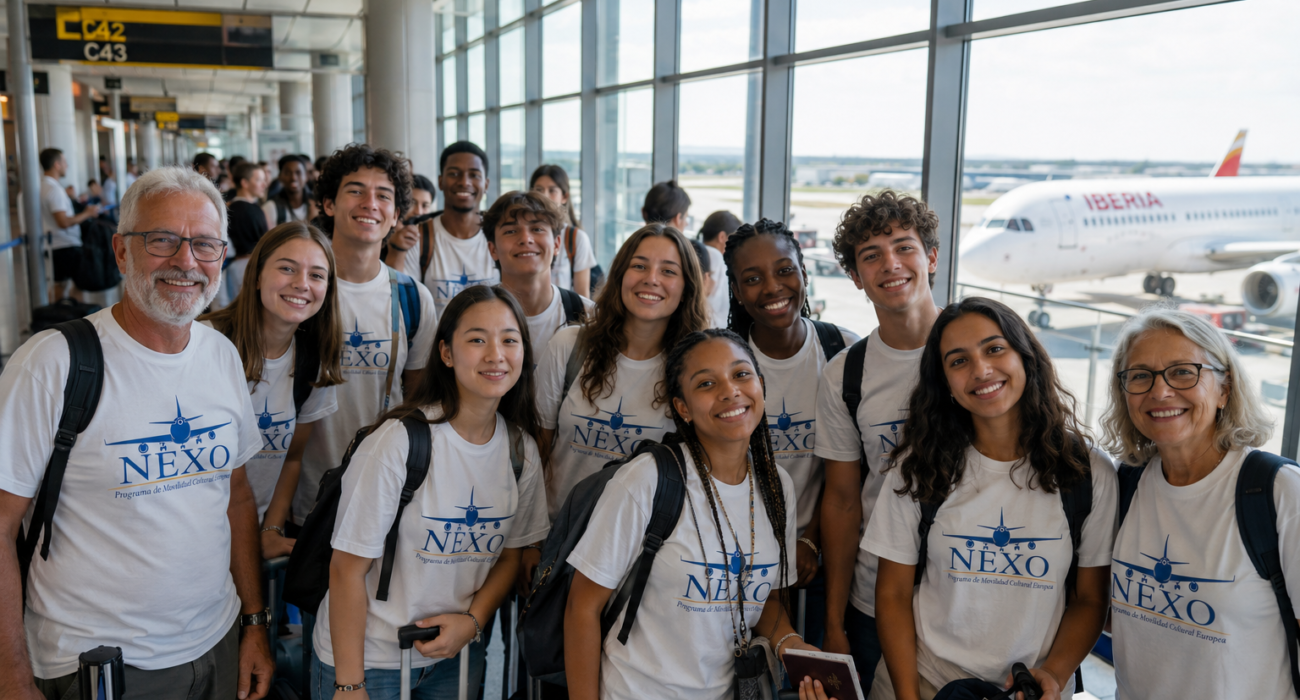
Free European Programmes represent one of the European Union’s largest public investments in education, culture, innovation, international cooperation and active citizenship. Although many people believe that participating in an international exchange, an artistic residency or a European project is expensive, the reality is that thousands of activities are financed with European funds, allowing participants to take part without covering the full cost themselves.
However, one common misconception still exists: many people believe these programmes are simply a “gift” from the European Union. That is not the case. Free European Programmes are part of a long-term political and economic strategy designed to strengthen cooperation between Member States, improve European competitiveness, encourage innovation and build a more engaged and connected European society.
Understanding how these programmes work is the first step towards making the most of the opportunities they offer. It also helps explain why the European Union invests billions of euros every year in projects that directly benefit individuals, organisations, businesses, universities, artists, public authorities and civil society.
What Are Free European Programmes?
Understanding Free European Programmes
When we talk about Free European Programmes, we refer to initiatives fully or partially funded by the European Union’s budget that allow international activities to take place without participants having to pay the full cost.
In practice, funding may cover expenses such as:
- international travel;
- accommodation;
- meals and subsistence;
- training;
- educational materials;
- insurance;
- cultural activities;
- project management;
- dissemination of results.
The level of financial support depends on each programme and each call for proposals, but the overall objective is always the same: removing financial barriers that prevent participation.
It is important to understand that “free” does not mean that nobody pays. It means that the main costs are covered through European public funds allocated to policies that serve the common interest.
Free European Programmes Are Not Individual Grants
One of the most common misunderstandings is the belief that any citizen can apply directly to the European Commission and receive funding.
In reality, most Free European Programmes finance projects developed by organisations, companies, associations, universities, public authorities or cultural institutions. Once a project has been approved, these organisations select participants according to the programme’s eligibility criteria.
As a result, when someone takes part in a youth exchange, an artistic project or a training activity funded by the European Union, they usually participate as a member of an already approved project rather than applying directly for individual funding.
Why Do Free European Programmes Exist?
The Origins of Free European Programmes
After the Second World War, European countries recognised that cooperation was essential for ensuring peace, economic development and political stability.
Over time, this cooperation expanded into areas such as:
- education;
- research;
- culture;
- youth;
- innovation;
- environmental protection;
- digital transformation;
- social inclusion.
The idea was simple: if people from different countries studied, worked and collaborated together, Europe would become stronger and better prepared to face shared challenges.
Free European Programmes were created as a direct result of this vision.
Cooperation Instead of Competition
The European Union does not finance these programmes solely to benefit individual participants. Their purpose is much broader.
Every funded project contributes to:
- strengthening cooperation between countries;
- sharing knowledge;
- promoting innovation;
- supporting economic growth;
- reinforcing European identity;
- encouraging intercultural dialogue;
- creating employment opportunities;
- improving international competitiveness.
Every euro invested is expected to generate a lasting social and economic impact.
Who Pays for Free European Programmes?
How Free European Programmes Are Funded
One of the questions most frequently asked is: Who pays for Erasmus+? More generally, who finances these European programmes?
The answer is straightforward: Free European Programmes are financed through the European Union’s budget.
This budget is funded through several sources, including:
- Contributions from EU Member States.
- The European Union’s own resources.
- Customs duties.
- A share of certain European taxes.
- Other revenues established under European legislation.
These resources finance common European policies that benefit all Member States.
More information about how the European budget works can be found on the official website of the European Commission.
European Union Funding as an Investment
Another widespread misconception is that the European Union simply “gives away money.”
In reality, European Union funding should be understood as a public investment.
When Europe finances a cultural project, a youth exchange or scientific research, it expects measurable outcomes such as:
- increased employment;
- greater innovation;
- improved education;
- stronger social cohesion;
- economic growth;
- democratic resilience;
- enhanced international cooperation.
Every funded project must demonstrate that it delivers tangible benefits to society.
Why Does the European Union Invest Billions of Euros?
Free European Programmes as Public Policy
The European Union faces challenges that no single country can fully address on its own.
These include:
- climate change;
- digital transformation;
- population ageing;
- social inclusion;
- cultural development;
- technological innovation;
- international competitiveness.
To respond effectively, Europe needs well-trained people, resilient organisations and strong international partnerships.
Free European Programmes are one of the principal tools used to build these capacities.
European Cultural Mobility as a Driver of Development
One of the areas experiencing the greatest growth in recent years is European cultural mobility.
Culture is no longer viewed solely as artistic heritage but also as a driver of innovation, economic development, social inclusion and international cooperation.
Through European programmes, artists can collaborate with institutions in other countries, cultural managers can receive specialised training and organisations can develop international partnerships.
This exchange of knowledge and experience strengthens both individual participants and the wider European cultural ecosystem.
What Benefits Do Free European Programmes Create?
Beyond Financial Support
Reducing Free European Programmes to their financial value alone would be a mistake.
Their true value lies in the long-term outcomes they generate:
- international partnerships;
- knowledge exchange;
- innovation in working methods;
- professional development;
- intercultural learning;
- stronger institutions;
- increased international visibility;
- new career opportunities.
European funding should therefore be understood as a strategic tool for creating sustainable change rather than simply providing financial assistance.
Free European Programmes Build a More Connected Europe
Free European Programmes exist because the European Union considers cooperation, education, culture and innovation to be strategic investments in Europe’s future.
They are not random grants or charitable initiatives. They are public policy instruments designed to strengthen the capabilities of individuals and organisations, encourage knowledge sharing and generate positive impacts that extend far beyond national borders.
Understanding this perspective helps reveal the true value of these opportunities. Participating in a European programme is not simply about travelling abroad or receiving financial support; it means becoming part of a shared European project aimed at building a more innovative, resilient and connected society.
In the next section, we will examine in greater detail how the European Union’s budget is organised, where the funding comes from and why investment in education, culture and innovation has become one of the cornerstones of European policy.
How the European Union Finances Free European Programmes
The success of Free European Programmes would not be possible without a long-term financial strategy. Every year, the European Union allocates billions of euros to projects that improve education, research, culture, innovation, social inclusion and international cooperation. These investments are not random. They are planned years in advance and respond to political priorities agreed upon by all Member States.
Understanding how this funding system works helps explain why so many opportunities are available to citizens, organisations and businesses across Europe.
How Are Free European Programmes Financed?
The Budget Behind Free European Programmes
The European Union operates with a multiannual financial framework that defines spending priorities over several years. Instead of preparing a completely new budget every year, the EU establishes long-term financial plans that provide stability and allow major programmes to operate efficiently.
This system ensures that Free European Programmes continue to support thousands of projects every year, even when economic conditions change.
The European budget is carefully distributed across strategic priorities, including:
- education and lifelong learning;
- scientific research;
- innovation;
- environmental sustainability;
- digital transformation;
- regional development;
- international cooperation;
- culture and creativity;
- youth participation;
- social inclusion.
Each programme receives funding according to the objectives established by the European institutions.
European Union Funding Is an Investment Strategy
Many people still believe European funding exists simply to distribute financial aid.
In reality, European Union funding is one of the EU’s main investment tools.
The objective is to improve Europe’s long-term competitiveness while creating positive social and economic impact.
For example, when Europe finances an international cultural cooperation project, it expects outcomes such as:
- stronger cultural organisations;
- improved professional skills;
- international partnerships;
- new employment opportunities;
- greater innovation;
- increased social participation;
- sustainable economic development.
Every project funded by the European Union must demonstrate measurable results.
Why Does Europe Invest in Education, Culture and Innovation?
Free European Programmes Strengthen European Cooperation
The European Union was founded on the belief that cooperation creates stronger societies.
Instead of encouraging competition between countries, Free European Programmes promote collaboration.
When organisations from different countries work together, they exchange knowledge, share good practices and develop innovative solutions that can benefit the entire European community.
This collaborative model is one of the defining characteristics of European funding.
Education as a Strategic Investment
Education remains one of Europe’s highest priorities.
Programmes such as Erasmus+ have demonstrated that international learning experiences improve professional skills, increase employability and strengthen European identity.
Students, teachers, youth workers and professionals who participate in international mobility programmes often return with:
- improved language skills;
- broader professional networks;
- greater intercultural understanding;
- increased confidence;
- valuable international experience.
These outcomes benefit both individuals and society as a whole.
Culture as a Driver of Innovation
For many years, culture was viewed primarily as heritage preservation.
Today, European institutions recognise culture as a strategic sector capable of generating:
- economic growth;
- tourism;
- creative industries;
- social cohesion;
- innovation;
- international cooperation.
This is why cultural projects receive significant support through several Free European Programmes, especially those promoting international collaboration and artistic mobility.
European cultural mobility has become an essential instrument for connecting artists, organisations and audiences across borders.
Innovation Creates Long-Term Value
Innovation is another major priority supported by European funding.
Innovation is not limited to technology.
It also includes:
- new educational methods;
- creative business models;
- digital transformation;
- cultural innovation;
- environmental solutions;
- social innovation.
Many Free European Programmes encourage organisations to experiment with new ideas that can later be replicated throughout Europe.
How Does a European Project Receive Funding?
The Selection Process for Free European Programmes
Funding is awarded through a transparent and competitive process.
In general, the process follows these steps:
- The European Commission publishes a call for proposals.
- Organisations study the eligibility requirements.
- International partners form a consortium.
- The project proposal is prepared.
- The application is submitted before the deadline.
- Independent experts evaluate the proposal.
- Successful projects receive funding agreements.
- Activities are implemented.
- Results are monitored and evaluated.
- Financial and technical reports are submitted.
Every stage follows strict quality standards designed to ensure that public funds are used responsibly.
Independent Evaluation
One of the strengths of European funding is its independent evaluation system.
Projects are generally assessed by external experts who examine:
- relevance;
- innovation;
- impact;
- sustainability;
- quality of the partnership;
- financial planning;
- expected results.
This helps guarantee transparency and equal treatment for applicants from every Member State.
Why Are Some Projects Approved While Others Are Not?
Quality Matters in Free European Programmes
Receiving European funding is competitive.
The strongest proposals usually share several characteristics.
They:
- respond to genuine European priorities;
- solve clearly identified problems;
- involve experienced and committed partners;
- present realistic budgets;
- define measurable objectives;
- demonstrate sustainable impact;
- include effective dissemination plans.
Projects that lack clear objectives or international relevance are less likely to receive funding.
International Partnerships Make a Difference
European cooperation is based on collaboration.
For this reason, most Free European Programmes require organisations from different countries to work together.
These partnerships create opportunities to exchange expertise, compare different approaches and develop innovative solutions that no single organisation could achieve independently.
The quality of the partnership is often one of the most important evaluation criteria.
Transparency and Accountability
Free European Programmes Require Responsible Management
Because these programmes use public money, every funded organisation must manage resources responsibly.
This includes:
- keeping accurate financial records;
- documenting activities;
- monitoring project outcomes;
- reporting expenses;
- demonstrating the achievement of objectives.
European funding is based on accountability rather than simply distributing grants.
Every euro invested must contribute to measurable public value.
Free European Programmes Invest in Europe’s Future
Understanding how Free European Programmes are financed changes the way we perceive them.
They are not temporary financial incentives or isolated grants. They are long-term public investments designed to strengthen education, culture, research, innovation, youth participation and international cooperation.
Every funded project contributes to broader European objectives by creating knowledge, improving professional skills, encouraging cultural dialogue and building stronger international partnerships.
For organisations wishing to participate, understanding these funding mechanisms is essential. It helps them prepare better projects, identify the right opportunities and build stronger international networks.
In the next section, we will explore the main Free European Programmes available today, including Erasmus+, Creative Europe, the European Solidarity Corps, Culture Moves Europe, Horizon Europe and other initiatives that support education, culture and international cooperation across Europe.
